






Tapla's 5-1-1 Container Mix in More Detail
I recently joined the forum and discovered Al's 5-1-1 Mix, but I had several questions that Al was kind enough to answer by email. I also found the answers to other questions in several different threads. I thought it would be useful to organize all of the info in one place so that we could have easy access to it. 98% of the following has been cut/pasted from Al's postings, and I apologize in advance if I have somehow misquoted him or taken his ideas out of proper context. The only significant addition from another source is the Cornell method of determining porosity, which I thought would be germane. I have used a question and answer format, using many questions from other members, and I apologize for not giving them proper credit. Thanks to all who contributed to this information. Now, here's Al:
Tapla's 5-1-1 Mix
5 parts pine bark fines
1 part sphagnum peat
1-2 parts perlite
garden lime
controlled release fertilizer (not really necessary)
a micro-nutrient source (seaweed emulsion, Earthjuice, Micro-max, STEM, etc,)
Many friends & forum folk grow in this 5-1-1 mix with very good results. I use it for all my garden display containers. It is intended for annual and vegetable crops in containers. This soil is formulated with a focus on plentiful aeration, which we know has an inverse relationship w/water retention. It takes advantage of particles, the size of which are at or just under the size that would guarantee the soil retains no perched water. (If you have not already read Al's treatise on Water in Container Soils, this would be a good time to do so.) In simple terms: Plants that expire because of drainage problems either die of thirst because the roots have rotted and can no longer take up water, or they starve/"suffocate" because there is insufficient air at the root zone to ensure normal water/nutrient uptake and root function.
I grow in highly-aerated soils with the bulk of the particles in the 1/16"-1/8" size, heavily favoring the larger particles, because we know that perched water levels decrease as particle size increases, until finally, as particle size reaches just under 1/8" the perched water table disappears entirely.
Ideal container soils will have a minimum of 60-75% total porosity. This means that when dry, in round numbers, nearly 70% of the total volume of soil is air. The term 'container capacity' is a hort term that describes the saturation level of soils after the soil is saturated and at the point where it has just stopped draining - a fully wetted soil. When soils are at container capacity, they should still have in excess of 30% air porosity. Roughly, a great soil will have about equal parts of solid particles, water, and air when the soil is fully saturated.
This is Cornell's method of determining the various types of porosity:
To ensure sufficient media porosity, it is essential to determine total porosity, aeration porosity, and water-holding porosity. Porosity can be determined through the following procedure:
* With drainage holes sealed in an empty container, fill the container and record the volume of water required to reach the top of the container. This is the container volume.
* Empty and dry the plugged container and fill it with the growing media to the top of the container.
* Irrigate the container medium slowly until it is saturated with water. Several hours may be required to reach the saturation point, which can be recognized by glistening of the medium's surface.
* Record the total volume of water necessary to reach the saturation point as the total pore volume.
* Unplug the drainage holes and allow the water to freely drain from the container media into a pan for several hours.
* Measure the volume of water in the pan after all free water has completed draining. Record this as the aeration pore volume.
* Calculate total porosity, aeration porosity, and water-holding porosity using the following equations (Landis, 1990):
* Total porosity = total pore volume / container volume
* Aeration porosity = aeration pore volume / container volume
* Water-holding porosity = total porosity - aeration porosity
The keys to why I like my 3-1-1 mix:
It's adjustable for water retention.
The ingredients are readily available to me.
It's simple - 3 basic ingredients - equal portions.
It allows nearly 100% control over the nutritional regimen.
It will not collapse - lasts longer than what is prudent between repots.
It is almost totally forgiving of over-watering while retaining good amounts of water between drinks.
It is relatively inexpensive.
Q. Why do you use pine bark fines? Bark fines of fir, hemlock or pine, are excellent as the primary component of your soils. The lignin contained in bark keeps it rigid and the rigidity provides air-holding pockets in the root zone far longer than peat or compost mixes that too quickly break down to a soup-like consistency. Conifer bark also contains suberin, a lipid sometimes referred to as natures preservative. Suberin, more scarce as a presence in sapwood products and hardwood bark, dramatically slows the decomposition of conifer bark-based soils. It contains highly varied hydrocarbon chains and the microorganisms that turn peat to soup have great difficulty cleaving these chains.
Q. What is the correct size of the fines? In simple terms: Plants that expire because of drainage problems either die of thirst because the roots have rotted and can no longer take up water, or they starve/"suffocate" because there is insufficient air at the root zone to insure normal water/nutrient uptake and root function.Pine bark fines are partially composted pine bark. Fines are what are used in mixes because of the small particle size. There will be a naturally occurring "perched water table" (PWT) in containers when soil particulate size is under about .125 (1/8) inch, so best would be particulates in the 1/16 - 3/16 size range with the 1/16-1/8 size range favored.
Note that there is no sand or compost in the soils I use. Sand, as most of you think of it, can improve drainage in some cases, but it reduces aeration by filling valuable macro-pores in soils. Unless sand particle size is fairly uniform and/or larger than about ½ BB size I leave it out of soils. Compost is too unstable for me to consider using in soils. The small amount of micro-nutrients it supplies can easily be delivered by one or more of a number of chemical or organic sources.
Q. Do you use partially composted pine bark fines? Yes - preferred over fresh fines, which are lighter in color.
Q. I found some Scotchman's Choice Organic Compost, which is made of pine bark fines averaging about 1/8" in size, and, after adding all ingredients, the 5-1-1 Mix had a total porosity of 67% and an aeration porosity of 37%. Is that all right? Yes, that is fine.
Q. What kind of lime do you use? Dolomitic.
Q. What amount of lime should I add if I used 10 gal of pine bark fines and the corresponding amount of the other ingredients? @ 5:1:1, you'll end up with about 12 gallons of soil (the whole is not equal to the sum of the parts when you're talking about soils), so I would use about 10-12 Tbsp or 2/3-3/4 cup of lime.
Q. What grade of coarseness for the lime? Most is sold as garden lime, which is usually prilled powder. Prilling makes it easier to use in drop & broadcast spreaders. The prills dissolve quickly. The finer the powder the quicker the reactive phase is finished. Much of the Ca and Mg will be unavailable until the media pH equalizes so the plant can assimilate the residual elements. Large pieces of lime really extend the duration of the reactive phase.
Q. Does this mean that I need to make up the soil in advance? Yes. 2 weeks or so should be enough time to allow for the reaction phase to be complete & residual Ca/Mg to become more readily available from the outset .
Q. During those 2 weeks, do I need to keep turning it and moistening it? No
Q. Can I go ahead and fill my 3-gal. containers, stack them 3-high, and cover the top one to prevent moisture loss during the waiting period? Something like that would be preferred.
Q. The perlite I use has a large amount of powder even though it is called coarse. Do I need to sift it to get rid of the powder? Not unless it REALLY has a lot - then, the reason wouldn't be because of issues with particle size - it would be because you had to use larger volumes to achieve adequate drainage & larger volumes bring with it the possibility of Fl toxicity for some plants that are fluoride intolerant.
Q. What about earthworm castings (EWC)? I think 10% is a good rule of thumb for the total volume of fine particles. I try to limit peat use to about 10-15% of soil volume & just stay away from those things that rob aeration & promote water retention beyond a minimal perched water table. If you start adding 10% play sand, 10% worm castings, 10% compost, 10% peat, 10% topsoil, 10% vermiculite to a soil, before long you'll be growing in something close to a pudding-like consistency.
Q. Do you drench the mix with fertilized water before putting in containers? No - especially if you incorporate a CRF. It will have lots of fertilizer on it's surface & the soil could already be high in solubles. If you added CRF, wait until you've watered and flushed the soil a couple of times. If you didn't use CRF, you can fertilize with a weak solution the first time you water after the initial planting irrigation.
Q. How much of the micronutrients should I add if I am going to be fertilizing with Foliage Pro 9-3-6, which has all the micronutrients in it? You won't need any additional supplementation as long as you lime.
Q. Just to make sure I understand, are you saying I don't need to use Foliage Pro 9-3-6 until after the initial watering right after planting even if I don't use a CRF? And no additional micronutrients? That's right - on both counts.
Q. Do I need to moisten the peat moss before mixing with the pine bark fines? It helps, yes.
Selections from Notes on Choosing a Fertilizer
A) Plant nutrients are dissolved in water
B) The lower the nutrient concentration, the easier it is for the plant to absorb water and the nutrients dissolved in the water - distilled water is easier for plants to absorb than tap water because there is nothing dissolved in distilled water
C) The higher the nutrient content, the more difficult it is for plants to absorb water and the nutrients dissolved in water
D) To maximize plant vitality, we should supply adequate amounts of all the essential nutrients w/o using concentrations so high that they impede water and nutrient uptake.
All that is in the "Fertilizer Thread" I posted a while back.
Q. Do you use the Dyna-Gro Foliage Pro 9-3-6 exclusively throughout the life of the plant, or change to something else for the flowering/fruiting stage? I use lots of different fertilizers, but if I had to choose only one, it would likely be the FP 9-3-6. It really simplifies things. There are very few plants that won't respond very favorably to this fertilizer. I use fast soils that drain freely & I fertilize at EVERY watering, and it works extremely well.
If you are using a soil that allows you to water freely at every watering, you cannot go wrong by watering weakly weekly, and you can water at 1/8 the recommended dose at every watering if you wish with chemical fertilizers.
Q. What about the "Bloom Booster" fertilizers? To induce more prolific flowering, a reduced N supply will have more and better effect than the high P bloom formulas. When N is reduced, it slows vegetative growth without reducing photosynthesis. Since vegetative growth is limited by a lack of N, and the photosynthetic machinery continues to turn out food, it leaves an expendable surplus for the plant to spend on flowers and fruit. There are no plants I know of that use anywhere near the amount of P as they do N (1/6 is the norm). It makes no sense to me to have more P available than N unless you are targeting a VERY specific growth pattern; and then the P would still be applied in a reasonable ratio to K.
Somewhere along the way, we curiously began to look at fertilizers as miraculous assemblages of growth drugs, and started interpreting the restorative effect (to normal growth) fertilizers have as stimulation beyond what a normal growth rate would be if all nutrients were adequately present in soils. ItÂs no small wonder that we come away with the idea that there are Âmiracle concoctions out there and often end up placing more hope than is reasonable in them.
What I'm pointing out is that fertilizers really should not be looked at as something that will make your plant grow abnormally well - beyond its genetic potential . . . Fertilizers do not/can not stimulate super growth, nor are they designed to. All they can do is correct nutritional deficiencies so plants can grow normally.
Q. Should I use organic ferts or chemical ferts in containers? Organic fertilizers do work to varying degrees in containers, but I would have to say that delivery of the nutrients can be very erratic and unreliable. The reason is that nutrient delivery depends on the organic molecules being broken down in the gut of micro-organisms, and micro-organism populations are boom/bust, varying widely in container culture.
Some of the things affecting the populations are container soil pH, moisture levels, nutrient levels, soil composition, compaction/aeration levels ..... Of particular importance is soil temperatures. When container temperatures rise too high, microbial populations diminish. Temps much under 55* will slow soil biotic activity substantially, reducing or halting delivery of nutrients.
I do include various formulations of fish emulsion in my nutrient program at certain times of the year, but I never rely on them, choosing chemical fertilizers instead. Chemical fertilizers are always immediately available for plant uptake & the results of your applications are much easier to quantify.
Q. Should I feed the plants every time I water? In a word, yes. I want to keep this simple, so IÂll just say that the best water absorption occurs when the level of solutes in soil water is lowest, and in the presence of good amounts of oxygen. Our job, because you will not find a sufficient supply of nutrients in a container soil, is to provide a solution of dissolved nutrients that affords the plant a supply in the adequate to luxury range, yet still makes it easy for the plant to take up enough water to be well-hydrated and free of drought stress. All we need to do is supply nutrients in approximately the same ratio as plants use them, and in adequate amounts to keep them in the adequate to luxury range at all times. Remember that we can maximize water uptake by keeping the concentrations of solutes low, so a continual supply of a weak solution is best. Nutrients donÂt just suddenly appear in large quantities in nature, so the low and continual dose method most closely mimics the nutritional supply Mother Nature offers. If you decide to adopt a "fertilize every time you water" approach, most liquid fertilizers can be applied at ¾ to 1 tsp per gallon for best results.
The system is rather self regulating if fertilizer is applied in low concentrations each time you water, even with houseplants in winter. As the plantÂs growth slows, so does its need for both water and nutrients. Larger plants and plants that are growing robustly will need more water and nutrients, so linking nutrient supply to the water supply is a win/win situation all around.
You can tell you've watered too much (or too little - the response is the same - a drought response) when leaves start to turn yellow or you begin to see nutritional deficiencies created by poor root metabolism (usually N and Ca are first evident). You can prevent overwatering by A) testing the soil deep in the container with a wood dowel ... wet & cool - do not water, dry - water. B) feeling the wick & only watering when it's dry C) feel the soil at the drain hole & only water when it feels dry there.
Soils feel dry to our touch when they still have 40-45% moisture content. Plants, however, can still extract water from soils until they dry down to about 25-30%, so there is still around a 15% cush in that plants can still absorb considerable moisture after soils first feel dry to us.
Q. When you water/fertilize, do you give it enough that 10% leaches out the bottom each time? Yes, I try to do that at every watering. Remember that as salts accumulate, both water and nutrient uptake is made more difficult and finally impaired or made impossible in severe cases. Your soils should always allow you to water so that at least 10-15% of the total volume of water applied passes through the soil and out the drain hole to be discarded. This flushes the soil and carries accumulating solutes out the drain hole. In addition, each thorough watering forces stale gases from the soil. CO2 accumulation in heavy soils is very detrimental to root health, but you usually can't apply water in volume enough to force these gases from the soil. Open soils allow free gas exchange at all times.
Q. Should I elevate my pots? The container will not drain the same % of water if it's sitting in a puddle, but the % won't be particularly significant. What will be significant is: if water (in a puddle) is able to make contact with the soil in the container through surface tension and/or capillarity, it will "feed" and prolong the saturated conditions of any PWT that might be in the container. However, if water can soak in or if it will flow away from the containers, there's no advantage to elevating when you're not using a wick.
Q. I like a pH of about 5.7. Is that about right? That's a good number, but you won't have any way of maintaining it in your soil w/o some sophisticated equipment. I never concern myself with media pH. That doesn't mean you should ignore water pH, though. It (water pH) affects the solubility of fertilizers; and generally speaking, the higher the water pH, the lower the degree of nutrient solubility.
Q. How do you repot? Some plants do not take to root-pruning well (palms, eg), but the vast majority of them REALLY appreciate the rejuvenational properties of major root work. I'm not at all delicate in my treatment of rootage when it comes time to repot (completely different from potting-up). Usually I chop or saw the bottom 1/2-2/3 of the root mass off, bare-root the plant, stick it back in the same pot with ALL fresh soil, use a chopstick to move soil into all the spaces/pockets between roots, water/fertilize well & put in the shade for a week to recover. I should mention that this procedure is most effective on plants with woody roots, which most quickly grow to be inefficient as they lignify, thicken, and fill the pot. Those plants with extremely fibrous root systems are easier to care for. For those, I usually saw off the bottom 1/2 - 2/3 of the roots, work a chopstick through the remaining mat of roots, removing a fair amount of soil, prune around the perimeter & repot in fresh, well-aerated soil.
I find that time after time, plants treated in this fashion sulk for a week or two and then put on a huge growth spurt (when repotted in spring or summer). Growth INVARIABLY surpasses what it would have been if the plant was allowed to languish in it's old, root-bound haunts. Potting up is a temporary way to rejuvenate a plant, but if you look ate a long-term graph of plants continually potted-up, you will see continual decline with little spurts of improved vitality at potting-up time. This stress/strain on plants that are potted-up only, eventually takes its toll & plants succumb. There is no reason most houseplants shouldn't live for years and years, yet we often content ourselves with the 'revolving door replacement' of our plants when just a little attention to detail would allow us to call the same plant our friend - often for the rest of our lives if we prefer.
Q. Is there any rule of thumb as to how often to root prune? I'm going to answer as if you included 'repotting' in your question. There is no hard, fast rule here. Some of you grow plants strictly for the blooms, and some plants produce more abundant blooms in containers when they are stressed in some manner. Often, that stress is in the form of keeping them root-bound. I'll talk about maintaining a plant's vitality & let you work out how you want to handle the degree of stress you wish to subject them to, in order to achieve your goals. Before I go on, I'd like to say that I use stress techniques too, to achieve a compact, full plant, and to slow growth of a particularly attractive plant - to KEEP it attractive. ;o) The stress of growing a plant tight can be useful to a degree, but at some point, there will be diminishing returns.
When you need to repot to correct declining vitality:
1) When the soil has collapsed/compacted, or was too water-retentive from the time you last potted-up or repotted. You can identify this condition by soil that remains wet for more than a few days, or by soil that won't take water well. If you water a plant and the soil just sits on top of the soil w/o soaking in, the soil has collapsed/compacted. There is one proviso though: you must be sure that the soil is wet before you assess this condition. Soils often become hydrophobic (water repellent) and difficult to rewet, especially when using liquid organic fertilizers like fish/seaweed emulsions. Make sure this effect is not what you're witnessing by saturating the soil thoroughly & then assessing how fast the water moves downward through the soil. The soils I grow in are extremely fast and water disappears into the mix as soon as it's applied. If it takes more than 30 seconds for a large volume of water to disappear from the surface of the soil, you are almost certainly compromising potential vitality.
I'll talk about the potential vitality for just a sec. Plants will grow best in a damp soil with NO perched water. That is NO saturated layer of water at the bottom of the pot. Roots begin to die a very short time after being subjected to anaerobic conditions. They regenerate again as soon as air returns to the soil. This cyclic death/regeneration of roots steals valuable energy from the plant that might well have been employed to increase o/a biomass, and/or produce flowers and fruit. This is the loss of potential vitality I refer to.
2) When the plant is growing under tight conditions and has stopped extending, it is under strain, which will eventually lead to its death. "Plants must grow to live. Any plant that is not growing is dying." Dr. Alex Shigo Unless there are nutritional issues, plants that have stopped extending and show no growth when they should be coming into a period of robust growth usually need repotting. You can usually confirm your suspicions/diagnosis by looking for rootage "crawling" over the soil surface and/or growing out of the drain hole, or by lifting the plant from its pot & examining the root mass for encircling roots - especially fat roots at the container's edge. You'll be much less apt to find these types of roots encircling inner container perimeter in well-aerated soils because the roots find the entire soil mass hospitable. Roots are opportunistic and will be found in great abundance at the outside edge of the soil mass in plantings with poor drainage & soggy soil conditions - they're there looking for air.
3) When the soil is so compacted & water retentive that you must water in sips and cannot fully flush the soil at each watering for fear of creating conditions that will cause root rot. This isn't to say you MUST flush the soil at every watering, but the soil should drain well enough to ALLOW you to water this way whenever you prefer. This type of soil offers you the most protection against over-watering and you would really have to work hard at over-fertilizing in this type of soil. It will allow you to fertilize with a weak solution at every watering - even in winter if you prefer.
Incidentally, I reject the frequent anecdotal evidence that keeping N in soils at adequacy levels throughout the winter "forces" growth or "forces weak growth". Plants take what they need and leave the rest. While there could easily be the toxicity issues associated with too much fertilizer in soils due to a combination of inappropriate watering practices, inappropriate fertilizing practices, and an inappropriate soil, it's neither N toxicity NOR the presence of adequate N in soils that causes weak growth, it's low light levels.
Q. Is there any rule of thumb as to how often to remove and replace the old soil? Yes - every time you repot.
As always, I hope that those who read what I say about soils will ultimately take with them the idea that the soil is the foundation of every container planting & has effects that reach far beyond the obvious, but there is a snatch of lyrics from an old 70's song that might be appropriate: "... just take what you need and leave the rest ..." ;o)
Comments (450)

tapla (mid-Michigan, USDA z5b-6a)
2 years agoIn addition to what EG said, when I first started talking about the gritty mix some 20 years ago, no one would believe you could even get anything to survive in it, let alone thrive. The consensus was, the richer and blacker the medium is, the better opportunity it offers for plants to realize their potential. I think the reason used coffee grounds are so sought after for use in compost piles is, they already LOOK rich and black.
In part, the gritty mix was slow to catch on for the reasons EG mentioned and it wasn't as black as compost. It was even a struggle to get anyone to entertain the idea that a 5:1:1 mix of pine bark/ peat/ perlite offered seriously more potential for most plants than the peat-based mixes virtually everyone was using at the time.
This thread reminds me of a thread I started about 13 years ago. Following is a paragraph from that thread. It was titled Perspective: 'You gotta change, man' ......
"As we laughed and visited, we traded stories, and Dick had a lot of them. At some point he stopped and said, "You know, Al - we don't do anything like we did 30 years ago. Everything is different." Of course, we all know that everything can't possibly be different, but we should all be able to see what he meant is, he's been around long enough to have seen lots of substantial change. He mentioned that horticultural practices and beliefs have changed radically since he began his endeavor. He talked of price increases and new machinery. He mentioned that some of the most far-reaching effects on how business was conducted and in the timing of operations came about when the advent of the use of plastic overtook the industry; but most often, he returned to the idea that growing practices have evolved continually, ever since he first began getting his hands dirty as a youth."
Al

chamaegardener (Z5) Northeast Illinois
2 years agolast modified: 2 years agoI just want to make sure I understand the reason for the various components.
The peat in 5-1-1 performs the similar water retention function of the Turface in gritty mix? The perlite in 5-1-1 serves the similar low water retention/better drainage function of the cherry stone in gritty mix?
If this is right, and weight of mix is not an issue for my use outside, then besides differences in cost and screening, a 5-1-1 mix (or 4-1-1, 3-1-1 or 2-1-1) using pine bark, Turface and cherry stone would perform similar to using peat and perlite?
In my case, I am finding the pine bark to be one of the costlier components of the gritty mix due to buying it pre-screened from bonsai suppliers. So it seems I would achieve similar results by increasing the pine bark in my already purchased gritty mix components if I wanted to increase water retention to lessen watering requirements. On that note, would there be reasons for or against simply increasing the Turface instead, to a 1-2-1 gritty mix (2 parts Turface)?
Related Professionals
Clemson Landscape Architects & Landscape Designers · Finneytown Landscape Architects & Landscape Designers · Cornelius Landscape Contractors · Lynn Landscape Contractors · Old Saybrook Landscape Contractors · Ramsey Landscape Contractors · Sun City Center Landscape Contractors · West Allis Landscape Contractors · Beverly Hills Solar Energy Systems · Maplewood Solar Energy Systems · Cypress Window Contractors · Two Rivers Window Contractors · Vero Beach Window Contractors · Bellevue Fence Contractors · Cherry Hill Fence Contractors
DonB
last yearlast modified: last yearThis is excellent information and as I have found, very productive and efficient for growing in containers. However, it is much too 'scientific' and "Ivy League" for most home gardeners who have to work a job, tend to kids, cook meals, have leisure activities, etc. While most of us support and agree with all this info, what we really need is where exactly the common rural person can actually find bags of 1/8 " pine bark fines !!! All /i can ever find is something called Clay-breaker, which doesn't exactly fit your certifications up there, and a brand called Nature's Helper Soil Conditioner, which I use, but they're a lot bigger than your formula shows. Scotchman's Choice Organic Compost is not found anywhere here. So that leaves us with the possibility of purchasing a shredder, which many of us can't afford or don't want to get that involved with it. Heck, I have grown Heirloom Tomatoes for years with much better taste and varieties than your typical Bonne Plants that Walmart, Lowe's H.Depot, etc always have, Many of those varieties are owned by the same company that makes Round-Up. That's a nice tasty thought !! But, alas, most still go to Lowe's or Walmart to buy their plants, even though I sell my heirlooms cheaper and bigger. So, people do what they feel comfortable doing I guess. So, what would really be nice is to go to a store and look in the gardening section and find a bag that says "
Tapla's Container Mix" with two types...5-1-1 ration and 3-11 ratio. Your choice !tapla (mid-Michigan, USDA z5b-6a)
last yearThere is a question mark feature on our keyboards that allows us to ask questions when when need something clarified.
While that might seem sarcastic on its face, it's an understatement meant to encourage you and other forum participants to engage and ask questions re what they don't understand. Knowledge is key to becoming a consistently proficient grower, and it isn't acquired by osmosis; rather, it requires an effort, and I can say with a great deal of certainty that it's easier to learn when you're engaged and can ask questions and get reliable answers as opposed to doing all your own research. Someone here will almost always be willing to answer questions asked by those in need of help.
Too, there often is a thread I or someone else can direct you to, which discusses the topic.
You might not have discovered it yet, but there is a thread that explains how water behaves in container media; a concept that will prove invaluable to those on a quest for a green thumb or more reward for their efforts at growing.
Where do you live? I often find I can find bark within a few minutes where ostensibly none was to be found.
Al

tropicofcancer (6b SW-PA)
last year@DonB Sourcing the components can be challenging for some depending on location. If I remember correctly someone on Etsy used to sell 511 mix at one point in time. Someone else used to sell gritty mix too. Shipping becomes expensive for individual bagged items like this and so it is not profitable.
If you post your approximate location (town, city) you may get more traction as to where to get the components or appropriate substitutes.

westes Zone 9b California SF Bay
last year@DonB There are sellers on both eBay and Amazon who sell well-made gritty mix. You can start out experimenting with it by buying it premade.
DonB
last yearThat may be ok for everyone who is tech-savvy, has decent internet, likes to pay shipping costs, and likes to buy products without seeing them up close. I don't mind myself, but it sure would be nice for all our rural farm people (particularly in Appalachia) to just go to a store and buy it.

gardengal48 (PNW Z8/9)
last yearExcuse my maybe obvious ignorance, but are "rural farm people" (in Appalachia or anywhere else for that matter) all that interested in container soil mixes?? I would not have thought them to be big container gardening demographic.
westes Zone 9b California SF Bay
last year@DonB What are you growing? I am guessing if you want to grow container vegetables that you will use 5-1-1 mix not gritty mix.
What you eventually realize when playing around with soil ingredients is that shipping cost exceeds product cost for anything that is not local. If you are not interested in making the mixes yourself - and I do not blame you because it is a time commitment initially - then you have to find someone out of your area that will do the dirty work for you and ship it to you.
I love volcanic pumice and find it far superior to perlite. Perlite you can buy anywhere. Pumice is hard to find here. The few pumice sources I have do not screen their material. So I pay $15 per bag and then have to pay a human $30 per bag to screen it. That's a huge waste of time, and even finding people to do the work can stall projects. So I found a pumice mine and order from them directly, with the material pre-screened. Now I pay $19/bag but $33 for shipping, but at least I do not need to rely on finding people and time to process the material.
The point of my example is that if you want something "special" that is out of the ordinary, and no one locally supplies it, you are going to either spend money in the form of time - yours or someone else's - or you are going to spend money to ship. No sense in complaining about it. This is the way the world works.
HU-659273525
last yearEven though buying in bulk is less expensive, I buy a smaller quantity of materials in bags because I don't have enough space to store truck loads of bulk materials.
I buy mini pine bark nuggets and soil conditioner at a big box store. If I cannot get the mini nuggets, I buy pine bark mulch and let it compost for a longer time.
I visit the store's website first because it might indicate how many bags are in stock at the location where I intend to shop and where it is located in the garden center. I write down the product location and take it with me. If the store where I shop is out of stock but has multiple locations nearby, I might need to change the store location on the website to see if one of their other locations has the product in stock. Checking the website before visiting the store saves a lot of time and energy.
I keep these materials separate, and empty the bags into small wire compost bins on the ground so that they can age before they are used. When I'm ready to mix soil, I dig into the center of the pile. After the bark composts for a short time, sifting is unnecessary.
I buy expanded shale from a local nursery. I've also seen it for sale at a feed and seed store. It's heavy material so I don't use it in large containers that I intend to move. But I often use it in the mix for raised beds, small containers and always use it when planting in the ground ...due to heavy red clay soil.
I like this pumice https://buildasoil.com/collections/aeration/products/pumice the shipping is expensive, so I figure out the best deal in terms of shipping, which usually works out to be 4 or 5 of the cubic foot bags.
~Rural farm people create an excellent and cost-free container mix for flowers: dirt from the woods combined with dirt from the chicken coop.

Jonah Henry
last yearCould someone please give me some feedback on this bark and my plans? I am making some 5-1-1 mix, and obviously it's pretty late in the season, so I'm pretty frustrated with difficulties trying to find the information I need(that I remember reading last year.)
I made it last year for my new citrus trees, but this year I'm making it for my pepper plants. One of my biggest challenges is with overwatering and being unable to feed the plants via watering, because of rain.
Last year I bought several bags of various brands of bark, and found that I kept having way too much <1/16", or way too much >1/2". The best I found had a lot of 1/4"-1/2" particles and a decent amount of 1/8"-1/4", but they all were severely lacking in the 1/16"-1/8" range.
I spent so much effort screening all the bark into individual grades so that I could mix them back together with the proportions I wanted. It pretty much took a lot of obsessing last year and it was too much work. and I think it warped my understanding of the basics, so now I'm confusing myself.
Due to numerous issues, I've just finally gotten the bulk fine bark mulch (advertised as a mix of fir and hemlock screened through 5/8") I've been planning for since last fall.
Luckily there is very little >1/2" to screen out,
I screened a small test batch and got roughly these percentages:
1/4"-1/2": 19%
1/8"-1/4": 25.5%
1/16"-1/8": 26%
>1/16": 29.5%
This is absolutely amazing compared to what I dealt with last year.
What I don't have a good sense of, and what I'm confusing myself about, is if 29.5% of the bark being <1/16", plus the 1 part of peat, will give me too much <1/16" overall and too small of an average particle size.
I remember reading that the overall total of particles <1/16" should be limited to about 1/6th of the total volume, but last year ended up with about 38%, because I didn't have much choice with insufficient amounts of 1/16"-1/8" and 1/8"-1/4".
It also seems like a lot of people don't bother doing any screening other than screening out >1/2" or >3/8".
Can I get away with not screening out the excess <1/16"? and should I forego the peat, and make this 6 parts bark to 1 part perlite?
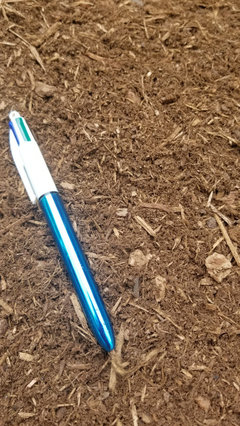
Here's a couple of pictures of the bark (after screening out the minimal amount of >1/2")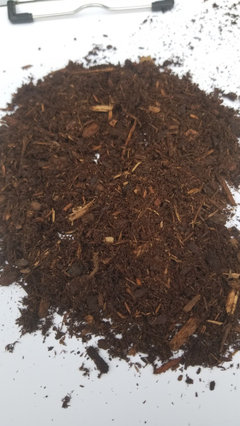

Enlightened Gardener
last yearI’ll chime in on this one since I have sifted and tested various sizes extensively over the years. After mixing my own gritty mix and 511, I actually had several bins full of “bark dust”, the really really fine stuff (it had fallen through my 1/20” screen). I began using this as the peat portion of several other mixes and it worked great. After that, I completely stopped sifting out the dust for my mixes (except gritty mix of course) and it worked even better for me, especially my outdoor plants (in CA).
Your mix contains more powder than Al’s so it will function somewhat differently but it will still work very well. Whether this is better or worse in your locale I can’t say. For me, extra moisture in CA was always a benefit to my plants.
Any mix that contains primarily bark will provide a great environment for roots. Even the tiny pieces will still contribute to the pores needed to create aeration within the pot. If you’re worried about it, just throw in an extra portion of perlite and call it a day. But over the years I actually switched to a supply of bark that contained more of the tiny and dusty particles and it performed better for me in sunny CA with my plants getting as much light as possible.
In summary, even though your bark is quite fine, when proportioned as a 511, it will perform substantially better than the vast majority of mixes out there. Don’t stress too much about needing the absolute perfect mix, bark is one of the best components out there. Your plants will know exactly what to do with it :)
Cheers
tropicofcancer (6b SW-PA)
last year@Jonah Henry From your pictures it looks to me that is some bark mixed with some shredded sapwood. There are lots of stringy woody material in the picture. If so, then it is not suitable as a soil component. Sapwood decomposes very quickly and negates any benefit of the bark. Bark looks more like flakes.
In our area Lowes this year is carrying pine bark mulch again. I think the brand is GardenPro. Looks like a very good candidate for the bark component. I will be buying few bags to check it out.
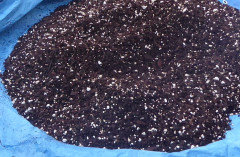
This is 511 using bark from Agway.
Jonah Henry
last yearlast modified: last yearHere's some pics from what I test screened. It rained yesterday so some of it's pretty wet.
I think there's a lot less sapwood than what I dealt with last year. Last year the wood pieces were a lot lighter colored though.
What do you think?
Picking out sapwood was also something I obsessed over last year, but it also stood out like a sore thumb. This year I'd rather just add more nitrogen if needed due to nitrogen being sequestered by the wood, if that's a good idea. I do have a big bag of alfalfa meal I bought years ago for the plant growth hormone benefit, perhaps I could add some of it and it will break down with whatever sapwood to provide nitrogen? I'll also be adding Dr Earth organic fertilizer, Osmocote, and feed with Foliage-Pro.
Also, here's a pic of my wheelbarrow that I screened <1/2" bark into. The right portion is wet from the rain yesterday. The left portion is dry material from stirring last night. And the center dark portion is some wet stuff I just dug up from the middle. I think, but may be wrong, that the surface looks like it has more wood than inside the material. I think that's from a combination of the larger pieces making it through the 1/2" screen after the smaller particles, as well as rain washing some of the smaller particles down into the mix, leaving the bigger longer wood pieces on top.
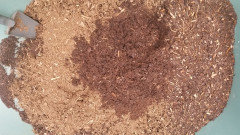
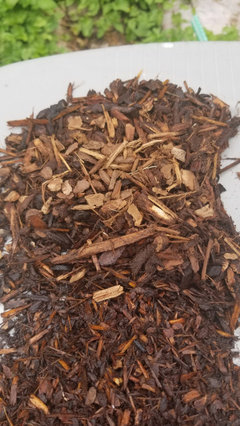
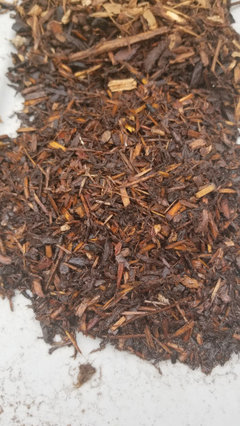
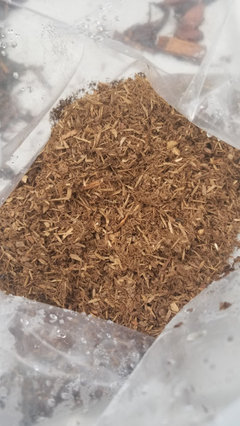
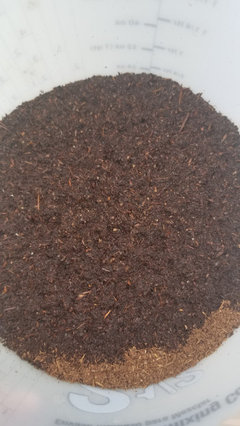
Edit: I will pick out big pieces of wood I see while preparing it, but I haven't yet.I just don't want to obsess over picking out all of it, especially the small pieces.
Jonah Henry
last yearSo I think you're supporting the idea of withholding the peat?
I got some nice coarse #3 perlite this year, that should be a good improvement over what i had last year (much of it fit through my 1/16" screen.)
I live near Seattle. Despite the reputation we usually have very sunny(not socal sunny) and dry summers, usually like 45 days without any rain during the peak of summer, but this year has been very unusual. We had such a wet and cool May and June, opposite of most of the country. I've been keeping my plants in my cheap plastic greenhouse and using my CFL grow lights because of that. I have another greenhouse I'm going to set up in case it keeps raining too much after I pot up. (and I have my 2 600 watt HPS grow lights in reserve to extend the season for my healthiest plants if necessary)
Despite my rain contingency plans, I'd prefer to make this mix as well as possible, to aid in overwintering and so I'm prepared and know exactly what to do with this bark early next year. (I got 2 yards of it)
tropicofcancer (6b SW-PA)
last yearWas busy repoting yesterday. Anyway couple of points:
Bark is a durable component. It does not break down into smaller bits easily and that is what primarily makes it great in soil mixes. Whereas sapwood would breakdown quickly into fine compost like material negating the benefit of porosity of bark based mix. Unfortunately, I think your bark has way too much sapwood both small and big, When I started out with 511 I faced the same issues and I can tell you sapwood is bad news. A little bit here and there is workable.
Next I would suggest that you should avoid solid organic fertilizer in 511 or gritty mix. They will just clog up all the air spaces that a porous mix provides negating all the hard work. Liquid organics such as fish emulsions will be OK in that respect. However, also consider that a porous mix in a container is not a great home for microbes to breakdown organics to provide nutrients for the plants. Works wonders in the ground where moisture and temperatures are far more stable for the microbes to do their work.
BTW I do not use peat in 511 like few others. Our area does not get too hot. A few days of 90+ here and there. Plus it usually rains here frequently. But this also means that I end up watering more often especially for freshly repotted plants. This year, though, we have been having longer stretches of no rain.
Jonah Henry
last yearI checked Lowe's, and they have the same as last year. The best option is Swanson's ground fir mulch.
Last year this is what I got from a bag. It was one of my best options last year.20% <1/16"
15% 1/16"-1/8"
26% 1/8"-1/4"
30.8% 1/4"-1/2"
8.2% >1/2"
That's after obsessively picking out sapwood and rocks.My quick and dirty math says I'd need to screen 26-30 bags of that into separate grades to get a plurality of 1/16"-1/8" particles.
Without getting into all the details, let's say that's simply not possible for me to do this year. Any time I put into my plants right now is frankly an irresponsible indulgence.
To be perfectly honest, here are my choices as I see them:A. make this bark work at least til the end of the season
B. give up on making my own soil mix, and use a pre-made mix like Kellog's, amending with perlite
C. throw in the towel for this year and dump my plants. This is essentially the wisest and most fiscally prudent option, considering the more important things that I should be using all of my energy on. But as gardening is a form of self-therapy for me, I'd prefer to not go with this option.
Will the sapwood in this bark break down into tiny particles by like October or November of this year?
Sure, I can leave out the Dr Earth fertilizer as it may be too late for it to do anything anyways. Typically I'd use it as my background is growing organically, and it's nice to know that it would be there adding some amount of benefit even if not much, but I do have the Foliage-Pro and Osmocote Plus. So I can do without it.
So what would your advice be? Using this bark and upping nitrogen input? Or using Kellogg's or equivalent? I could use Black Gold but it's twice the price.Maybe I should consider Promix, which I always kind of ignored before?
Jonah Henry
last yearlast modified: last yearI ran a bunch through the 1/4" screen...just screening into the middle of the wheelbarrow, scooping from the top layer/exterior. (top layer, I think is as bad as it should get for the wood) I think there's more bark than it looks like in some other photos.
I spent a few minutes picking some out, so there's a before and after pic.
It started raining so I didn't go back and get a bigger sample of <1/4" yet.
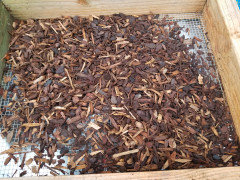
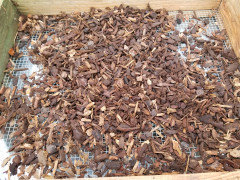
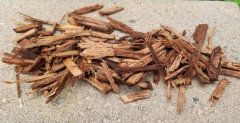
I was thinking, if that's still too much wood in >1/4", I could get some bags of the Swanson's mini bark nuggets. That was about 2/3 between 1/4"-1/2" last year. So it wouldn't be too difficult to replace that fraction.But... I checked and it looks like Lowe's only has medium nuggets currently.
tropicofcancer (6b SW-PA)
last yearThose last pictures look more promising. I think you can make it work. You will need to add some fines. If your sifted fines look bad, use peat. Hard for me to tell how much. But you can make two/three small experimental mixes and check their PWT. Keep the peat part no more than say 20% of the mix by volume. Properly made 511 has a small PWT say about 1/2 to 1 inch.
Promix is not bad as the peat fraction. It also has some perlite - the smaller kind.
Often I reuse used 511 mix. My original 511 mix does not have peat. But I sift the used 511 through 1/8 screen and add about 10-20% of Promix in and use for annuals.
The other option is to look for fir bark. Out west it is more common. To me it seems better than pine bark. We never see bagged fir bark out here in the east.
Jonah Henry
last yearWhat I have right now is supposed to be a fir/hemlock mix.
The ground fir bag last year, if I remember correctly, had all fibery bark, long pieces that might get mistaken for sapwood if not examined closely. But it was definitely bark. I think the grind was just like that, tearing more than chipping. I wish I had taken more pics. But that's why I didn't notice there was this much sapwood in this bulk bark this year, a lot of the sapwood looks darker than what I saw last year and more flexible. More fibery. I need to screen a big pile of fines to examine.
I really wish this was easier lol. That brands would care more about the consistency of what they put out.
This photo is from last year, a partially composted bag of Greensmix Pine Bark Mulch.The bark particles were darker and a lot more "chipped" than the fir, so I preferred them. But there was so much sapwood and rocks.
<1/16 31.7%
1/16-1/8 22%
1/8-1/4 44%
My notes only total 41 quarts out of the supposed 2 cuft bag. Maybe I'd get lucky with some fresher bags.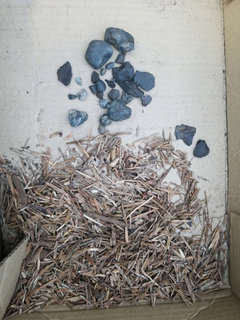
tropicofcancer (6b SW-PA)
last yearThe bagged stuff these days are very inconsistent and often poor quality at the big box stores. I had good experience with Agway. The quality of the pine bark is consistently good so far.
In spring I bought a few bags of top soil for my pond plants from HD. Supposed to be sandy loam sorts. Instead half of it was sticks, mulch, stones (like pea gravel and larger) and bits of plastic. Whereas when I order bulk from garden centers the soil is wonderful. But I just needed a bags worth this time. I should have just gone to the garden center and begged them to sell me a bucket of soil.
Jonah Henry
last yearlast modified: last yearI built some new screens that are bigger and lighter to make screening easier. I also got some bags of bark from stores I didn't know existed to try them. I really need to finish that all.
I plan to use mostly the bark I bought 2 yards of, but there's more wood in the larger sizes, so I'm hoping to use some other bark to replace some of the 1/4-1/2 and 1/8-1/4 fractions, to save time on picking out wood.
I'm going to end up with a lot of separated grades, so I have a question about that.If I can control the exact portion of each size that goes in, what's an ideal percentage of each size?
So <1/16, 1/16-1/8, 1/8-1/4, and 1/4-1/2
four (9B near 9A)
last yearAl, because Houzz site is incapable of searching in any useful way, I am forced to bother you with a request for the URLs to the threads titled "Container soils water movement & retention".
gardengal48 (PNW Z8/9)
last yearHere ya go!! https://www.gardenweb.com/discussions/contain/query/container-soils-water-movement/nqrw
Actually, searching is very easy if you enter the site under GardenWeb rather than Houzz.:-)
four (9B near 9A)
last yearlast modified: last yearThank you. Note that that URL gets redirected into houzz site, and gives the same useless results. A manual search in gardenweb site gets the good stuff.
gardengal48 (PNW Z8/9)
last yearYep! It's got all the renditions of this topic going back to 2007. Do they not show up for you? GardenWeb does not function properly if you use the app so try a laptop or regular computer.
If you let us know which edition in particular you are looking for, we can provide a specific link.
four (9B near 9A)
last year>"Do they not show up for you?" ___ They won't show up for you, either, if you use the URL that you gave.
A manual search in gardenweb site gets the good stuff.
gardengal48 (PNW Z8/9)
last yearlast modified: last yearI have no idea what you are talking about. Using that link/URL I provided, all the threads listed under that search come up perfectly for me. There is NO redirection to Houzz ........but then I remain permanently signed in via GardenWeb. I find the Houzz platform too confusing to navigate and too lacking in the features - like the search function - that work perfectly well in GardenWeb
four (9B near 9A)
last yearlast modified: last year>"signed in via GardenWeb." __ That might account for the difference in behaviors. Now the trick for me is how to do it, given that, in gardenweb.com the link "Sign In" is to URL houzz.com/houzz-login/ etc. etc.
four (9B near 9A)
last yearlast modified: last yearJordan, redirection is what we do not want. We want to use the address as specified.
Just now in gardenweb.com I used the Sign In link (whose URL is the houzz address that I wrote above). Address in address bar after sign-in shows gardenweb.com domain. Now use of the search URL that we are discussing does not redirect, and desired results are given.
gardengal48 (PNW Z8/9)
last year"All that comes up clicking on that link are posts in Container Gardening."
And all of them are titled Container Soils - Water Movement and Retention, which is exactly what was asked for. This is a very long running series of threads that contain invaluable info for anyone interested container gardening. So what is your point, Jordan, and why are you following me from forum to forum, commenting on every thread I respond to?? Rather stalkish behavior.
Four, I have sometimes gotten lost in a Houzz maze I could not remove myself from and had to resort to Google to access a specific GardenWeb forum. Maybe try that with Container Gardening and then do the search.four (9B near 9A)
last yearBottom line is what I last wrote : Just now in gardenweb.com I used the Sign In link (whose URL is the houzz address that I wrote above). Address in address bar after sign-in shows gardenweb.com domain. Now use of the search URL that we are discussing does not redirect, and desired results are given.

Fahmy
last yearhow do you guys bare root/remove the soil for repotting in the new mixes ? any tips on how to remove the soil without damaging the roots, whether the transplant can be done when the plant is actively growing, etc .
many thanks in advance,
tropicofcancer (6b SW-PA)
last year@Fahmy What kind of plant is it and which zone you are located in? For tropicals you can bare root if it is actively growing. For deciduous and conifers it is best to do at bud break. I use several techniques learned through bonsai practice to bare root a plant. Assuming the plant is root bound in its current pot here are the steps in brief:
Cut/saw off the bottom inch or so of mat of roots. If roots are also circling the sides then slice those off too. Then use a root rake (a metal tool with a hook at the tip) to comb out the roots - starting from the sides. You can use a chopstick instead. Periodically wash off the soil using a hose. Either the mist setting or the flat setting. It is also important keep the roots wet through the process. Work you way into the center core of the plant to remove bulk of the soil. Finally you can wash of the rest - hopefully. It is a slow process and depends on size and how dense the root system is.
Fahmy
last yearI have a "grevillea johnsonii" which I moved to Gritty mix last week (first week of April), the Zone is 7a (south of Germany), but the tree is kept indoors. Grevillea johnsonii as far as I know is an evergreen, it had a mesh of fine roots, I tried to clean off most of the soil by shaking the rootball and working the tips of my fingers through it. I am concerned as it has wilted and almost all of its beautiful flowers have lost their color and died :( , the buds which haven't flowered yet are already dry, I am not sure if it has to do with the timing of the repotting or the plant itself is extra sensitive, I haven't found much about experience with repotting grevillea johnsonii,
- any advices what to do to aid the recovery and how to avoid such issues in the future ?
I am disappointed as I tried to follow the instructions as much as possible while preparing the mixes or repotting, and all the other plants which went in the 5:1:1 mix are doing fine, it is only the grevillea which I decided to repot is gritty as it is of a higher -personal- value to me
I also have a Citrus Arcobal which is already flowering, I was planning to repot it this weekend in gritty mix, should I proceed or wait until the plant is dormanttropicofcancer (6b SW-PA)
last yearBoth will be considered tropicals. For tropicals mid June to July is better time, in northern hemisphere, to do any major root work. Citrus can be repotted now although I usually do all my tropicals starting in June. But I also put my plants outside during that time and with all the light and warmth they become much stronger and healthier and so I am more confidant that the plant will recover. Also right after a repot I put the plant in shade for a week or so before exposing them to Sunlight. And make sure soil is moist/wet consistently through this recovery period.
Since your plants are indoors, one possibility is that the plants may not be as strong to recover. I suggest water it daily for a week or so. Perhaps too many roots got removed. Watering plants in gritty mix takes a little while to get used to. I will also suggest to remove all the flower buds - they just consume energy. Also prune some leaves off - to reduce water demand. Lastly consider making a make shift humidity tent with clear plastic - either sheet or containers. But leave some holes for air flow. 100% humidity is not good either. 70-75% is more than enough.
Some of my citrus are in gritty mix. The ones I plan to keep small. For the larger ones I use 511 since it is much lighter and easier to move the pot around.
By the way, I had to look up the plants you mentioned. They look stunning. Never seen or heard about them before.Fahmy
last yearmany thanks for the useful information and the prompt responses :)
I am watering daily, won't fertilize until I start seeing signs of recovery/new growtha humidity tent would be challenging as the plant is more than 1,5m tall, but I am misting it daily using a sprayer, it is placed where it gets some indirect sunlight and i will prune off the flowers/buds
additional links or info are highly appreciated :)I am a bit worried as I never had a plant showing signs of stress/shock after repotting
tropicofcancer (6b SW-PA)
last yearI do not have any particular links handy. But there are some videos on youtube on bare-rooting and repotting bonsai trees. Not sure how helpful will be that.
1.5m tall plant !! Quite a large plant. At this point just wait and see. Should recover but may lose some branches and leaves.
Also consider that indirect Sunlight indoors can be quite low level of light. You may want to move it to a spot closer to window so that it gets a few hours of direct morning light. Morning light is not as intense and passing through a window it cuts down the intensity even further.
JodiK
last yearThank you for all your work in putting information together in one place. That was very nice of you!
I find that if I soak all my ingredients for a day or two before mixing my Gritty Mix, it helps mitigate any harsh recovery of the plants being placed in it. That, and I place them out of direct light for a short time after potting, like on the lower shelf in my greenhouse. That seems to help, too.
four (9B near 9A)
last year>"soak all my ingredients... before mixing my Gritty Mix" ___ Soaking is good, but there is a reason to delay it until after plant is in it : Particles of dry medium, being loose, better surround the roots, and even better if you then shake /strike the container. Of course in this case you would soak for less time.
>"out of direct light... after potting" ___ A universal truth.
JodiK
11 months agoWell, I suppose I speak more of Al's Gritty Mix than the 511 because I use it more often, and that's what first comes to my mind, although re-potting a plant into any different type of medium would have certain effects on the root system as it becomes accustomed to its new "home". And then, there might be differing effects depending on the exact ingredients used, dependent upon those available in one's area.
As most of us know, there's a bit of a learning curve when moving from the commercially sold potting soil to a mixture that is actually beneficial to better root health and growth. And there will be variables to deal with, such as one's individual gardening zone, local environment, etc.
As a general rule, I don't do much to settle the medium once the plant is potted, except to allow a good watering and repeat to help. I suppose we each have our own methods, given what works best for us (through trial and error) and the plant type and size we're re-potting.
I work mainly with tender bulbs that otherwise wouldn't grow in my zone, such as Hippeastrum, Crinum, Sprekelia, and a few others.
Sometimes I change the ratio of ingredients to better suit a particular plant and its needs. But I find that's the beauty of using such mediums; they can be tailored to the individual plant and other aspects of growing what and where we do.
Happy Gardening!

DLEverette_NC_Zone7b
3 months agoI plan to make a lot of this and was wondering about the peat moss. I'm buying it compacted, and am not sure if that matters when considering measurements
Enlightened Gardener
3 months agoDefinitely soak and rehydrate it before mixing. Get it loose and fluffy. I much prefer coco coir at this point, but either way I usually throw it in a 5 gallon bucket and give it a good soak and break it up with my hands. Then you can measure it out in proper proportions and it will be less hydrophobic. Have fun! Cheers
tapla (mid-Michigan, USDA z5b-6a)
2 months ago@dleverette When making 5:1:1 mix, I break-up the compressed chunks of peat so they pass through a 1/2" screen. I toss any sticks and such on top of the raised beds where they break down with time.
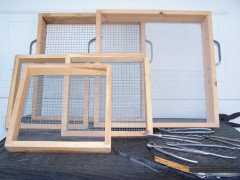
Here's a tip you'll find very helpful. For large batches of 5:1:1, pour the bark onto a tarp laid on a flat surface, then wet the bark a bit. Then, add the screened peat and spread it over the bark. Add your lime on top of the peat, then put down the perlite and wet that. The trick is to use just enough water to make the mix damp when it's thoroughly mixed. Both peat and pine bark are hydrophobic (water repellent) when allowed to dry below about 20% of their water holding ability. This makes a dry 5:1:1 mix extremely difficult to rewet if you don't moisten it when you make it. The moisture in the mix diffuses, moistening the bark/ peat and "breaking" its tendency to repel water. Within 15-30 minutes of making the mix you can pot plants and water them in thoroughly w/o the frustration associated with trying to rehydrate a dry soil.
FWIW, I don't use coir. As many times as I've tried it and cone comparative experiments, I've always had problems or been dissatisfied with the results. You might be interested in a comparison between peat and coir I wrote several years back:
Peat vs. CoirSphagnum peat and coir have nearly identical water retention curves. They both retain about 90-95% of their volume in water at saturation and release it over approximately the same curve until they both lock water up so tightly it's unavailable for plant uptake at about 30-33% saturation. Coir actually has less loft than sphagnum peat, and therefore, less aeration. Because of this propensity, coir should be used in mixes at lower %s than peat. Because of the tendency to compact, in the greenhouse industry coir is primarily used in containers in sub-irrigation (bottom-watering) situations. Many sources produce coir that is high in soluble salts, so this can also be an issue.
Using coir as the primary component of container media virtually eliminates lime or dolomitic lime as a possible Ca source because of coir's high pH (6+). Gypsum should be used as a Ca source, which eliminates coir's low S content. All coir products are very high in K, very low in Ca, and have a potentially high Mn content, which can interfere with the uptake of Fe. Several studies have also shown that the significant presence of phenolic allelochemicals in fresh coir can be very problematic for a high % of plants, causing poor growth and reduced yields.
I haven't tested coir thoroughly, but I have done some testing of CHCs (coconut husk chips) with some loose controls in place. After very thoroughly leaching and rinsing the chips, I made a 5:1:1 soil of pine bark:peat:perlite (which I know to be very productive) and a 5:1:1 mix of CHCs:peat:perlite. I planted 6 cuttings of snapdragon and 6 cuttings of Coleus (each from the same plant to help reduce genetic influences) in containers (same size/shape) of the different soils. I added dolomitic lime to the bark soil and gypsum to the CHC soil. After the cuttings struck, I eliminated all but the three strongest in each of the 4 containers. I watered each container with a weak solution of MG 12-4-8 with STEM added at each watering, and watered on an 'as needed basis', not on a schedule. The only difference in the fertilizer regimen was the fact that I included a small amount of MgSO4 (Epsom salts) to provide MG (the dolomitic lime in the bark soil contained the MG, while the gypsum (CaSO4) in the CHC soil did not. This difference was necessary because or the high pH of CHCs and coir.) for the CHC soil.
The results were startling. In both cases, the cuttings grown in the CHC's exhibited < 1/2 the biomass at summers end as the plants in the bark mix.
I just find it very difficult for a solid case to be made (besides "It works for me") for the use of coir or CHC's. They're more expensive and more difficult to use effectively. The fact that some believe peat is in short supply (no where near true, btw) is easily offset by the effect of the carbon footprint of coir in its trek to the US from Sri Lanka or other exotic locales.
That's the view from here. YMMV
Coir Study: https://sites.google.com/site/plantandsoildigest/usu-crop-physiology-laboratory/coconut-coir-studies
AlDLEverette_NC_Zone7b
2 months ago@tapla (mid-Michigan, USDA z5b-6a) Thank you so much for the information! It sounds like the screening process provides some aeration too, which might affect measurements. I wonder if that's all that's needed for the "expansion" that is supposed to happen with compacted peat moss.
I bought a 3.9cuft bag of it and wet it to see what would happen. It didn't really make much of a difference in terms of expansion - certainly nothing like coco peat (which I don't plan to use for the reasons you listed). So for the 5-1-1 mix measurements, I'm just going to use dry measurements and see how it turns out.tapla (mid-Michigan, USDA z5b-6a)
2 months agoIf you start with a chunk of dry compressed peat, when you screen it the volume goes up by maybe 10-15% ..... like fluffing a pillow. If you were to start with a 6" column of screened dry peat and add water, the peat's volume decreases - probably by as much as 25%. This is because the added weight of the water inside of and on the surface of peat particles increases gravitational flow potential which affects peat's loft. Another way to say it is, peat compacts when top watered. Tip: peat has much more loft than coir when it's wet, which is why most greenhouse ops that use any coir at all, limit it's volume to 10% or less of the finished medium. Media with larger than 10% fractions of coir will compact much more readily than media with peat as it's only source of fine material.
Al






tapla (mid-Michigan, USDA z5b-6a)