





Wollemi Pine?
So I was in Sydney, Australia a few years ago and went to visit the blue mountains. Apparently they have a very rare stand of Wollemi Pine hidden somewhere in a secrete cove. Anyway I learned they are an ancient species of conifer dating back to 200 million years. Recently I found out that they are hardy to zone 7a. Anyone have one? I might give it a try in a south facing microclimate.
Comments (76)

davidrt28 (zone 7)
11 years agoHelp yourself:
Here is a link that might be useful: http://www.ncsu.edu/jcraulstonarboretum/horticulture/current_plantings/current_plantings_advanced_search.html
Related Professionals
Beavercreek Landscape Architects & Landscape Designers · Middle Island Landscape Architects & Landscape Designers · Willowick Landscape Architects & Landscape Designers · McKinney Landscape Contractors · Barrington Landscape Contractors · Cockeysville Landscape Contractors · Lynwood Landscape Contractors · Northport Landscape Contractors · Peoria Landscape Contractors · Riverhead Landscape Contractors · Wethersfield Landscape Contractors · Quartz Hill Landscape Contractors · Baltimore Siding & Exteriors · Fort Worth Decks, Patios & Outdoor Enclosures · Palm Beach Gardens Decks, Patios & Outdoor Enclosures
sam_md
11 years agonikkie wrote would love to find some type of araucaria for Charleston Can we assume that you mean Charleston SC? In that case check out the 36' high Arauacaria angustifolia in the Atlanta Botanical Garden:
http://significanttreesofgeorgia.uga.edu/araucariaangustifolia.pdf
Also, check out my gardenweb thread and see the beautiful Monkey Puzzle at Norfolk Zoological Park.Here is a link that might be useful: My Monkey Puzzle Thread
nikkie_in_toronto
11 years agoIt appears that the best araucaria, would obviously be angustifolia. I have seen very nice specimens at Magnolia Gardens in Chstn as well as one of the public squares in downtown Savannah. Interesting list from JC Raulston Arb. I am surprised to see Calocedrus decurrens, Cupressus macrocarpa as well as Sequoia sempervirens. I started growing a few things in Toronto many many years ago, and eventually moved to the Cleveland Ohio area and have (over my many years) collected various cultivars of Cryptomeria japonica, Cedrus atlantica and deodara, Cupressus glabra, Sequoiadendron giganetum and others including Cunninghamia that were allegedly not "cold hardy" yet have lived over two decades for me here along Lake Erie. This will probably be my last garden, at this age, and is a totally new experience for me dealing with heat over cold. I'm certainly interested in learning and any information you all would have is so greatly appreciated. N
davidrt28 (zone 7)
11 years agoNB that not every tree at the Arboretum is exactly thriving. I suspect Calocedrus has a southern limit on the US East Coast, and that limit is probably right around the NCSU arboretum. I don't remember what their plant looked like.
davidrt28 (zone 7)
11 years agoby which of course I mean Calocedrus decurrens. The Taiwanese one will pick up where the Californian one leaves off, and possibly grow as far south as Orlando.
nikkie_in_toronto
11 years agoI read Sams monkey puzzle tree link. That is a beautiful specimen in Norfolk VA. I've heard of araucaria araucana doing well in the upstate of SC, but I am wondering what its southern limit is? I only have room for about 5 or 6 "large" specimens. I hear people say that they are growing a "monkey puzzle tree" as far south as NOLA, but I think they are confusing araucana and angustifolia or even perhaps cunninghamia...
davidrt28 (zone 7)
11 years agoI'm a little surprised to see this tree in Norfolk. NB that that the botanical garden there DOES NOT have one, and they have certainly tried them. There was a guy named Fred Huette who tried a bunch of rare & exotic plants in the 60s-70s, and I have no doubt he would have tried some monkey puzzles although I don't specifically remember if his book mentioned them. A friend of my family knew him and I suppose I could always contact him to see if he remembers that some were planted.
IN ANY CASE I think the Norfolk tree is one of the lucky survivors I mentioned. These trees just hate east coast conditions...end of discussion. The fact remains they do have an absolute southern limit on the East Coast (as well as a northern one, obviously), and in Charleston you'd be totally wasting your time with it in my opinion. They can die on you when they get up to 10' or so...that happened to a tree in Columbia, MD. Then you have a tedious prickly carcass removal job. Just get an A. angustifolia that far south. I think they are more picturesque when they got large anyhow, and they grow faster.davidrt28 (zone 7)
11 years agoHere's a Parana pine I started from seed in 2000, 11 years later. This is in a zn 8 part of the Gulf South. As you can see the growth rate is excellent, especially since its first 3-4 years were in a pot that got passed-along several times! (this is a fair use of someone else's photo. I removed a person but you can see her arm)
The seed was from Chiltern but they haven't had it in many years since then.
{{gwi:486755}}
Embothrium
11 years agoNice and bushy. West coast ones I have seen were not nearly as striking as monkey puzzle, look rather more like Cunninghamia instead - as does yours.
Biggest I have seen is at San Francisco Botanic Garden. Zonal denialists like to push this as a hardy species but I know of no lasting examples of any serious size at my latitude. A small one I planted on Camano Island a few years ago is still alive but creeps along.
Jacobson, North American Landscape Trees (1996, Ten Speed Press, Berkeley) reports that one in Montecito was 67' tall by 1992.
davidrt28 (zone 7)
11 years agoThanks. Jacobson rocks. I love that book.
I wonder how long it takes them to develop the upturned umbralla tops. A tree I saw in Sonoma County wasn't there yet and was clearly old than this one.nikkie_in_toronto
11 years agoBeautiful tree, David. I will definitely try that one if I can find a source for it. Thank you again!
salicaceae
11 years agoHere is my Wollemia I grafted onto Agathis robusta. It is much bigger now..
{{gwi:486757}}From Conifers August 2011pineresin
11 years ago"Here is my Wollemia I grafted onto Agathis robusta. It is much bigger now"
Very weak-looking stem, though. It badly needs some more diameter. Etiolated?
Resin
salicaceae
11 years agoYes, the root stock was slow to catch up with the scion growth. After being placed outside in more sun and such, it is catching up, but graft inocompatibility may be an issue in the future? This photo was taken during the winter when I had it in the greenhouse, and at night.
salicaceae
11 years agoYes, we had some nutritional issues for a while - bad potting mix. It is green now.
sam_md
11 years agoHere's the neat thing about the Wollemi and closely related Araucariaceae, they not only survived the breakup of Pangaea but managed to hang on after the K-T extinction event which drove the dinosaurs extinct and ended the Cretaceous. That's the fantastic part of their story which is missing from this thread.
pineresin
11 years ago"they not only survived the breakup of Pangaea but managed to hang on after the K-T extinction event which drove the dinosaurs extinct and ended the Cretaceous. That's the fantastic part of their story which is missing from this thread"
errr . . . . so did everything else that we see around us. No great shakes! ;-)
Resin
sam_md
11 years agoI've been reading A Natural History of Conifers by Aljos Farjon. Maybe an understanding of WP's native setting would be helpful. The Wollemi Wilderness consists of elevated plateaus of Triassic sandstone. WP's companions are coachwood Ceratopetalus apetalus and sassafras Doryphora sassafras .
Contrast this with the 13 species of Araucaria growing on New Caledonia. The distribution maps of these species overlaps the ultramafic soils where nickel mining occurs.
Araucarias growing in Chilean Cordillera's volcanic soils are likewise ultramafic however the elements in this case are Iron & Magnesium.
Here is Table 4 from the book. This shows the ancient lineage of Podocarpaceae & Araucariaceae traced back to the Triassic which makes them unique among extant conifer families.
{{gwi:486758}}sam_md
11 years agoLast Thursday the BBC reported that Wiltshire College's WP is forming cones. As the species is monoecious I suppose this means it could actually produce viable seed?
Here is a link that might be useful: BBC Article
sam_md
10 years agoAs I write this the temperature is a frigid 5ð F in Washington DC. This will be a great chance to see just how much cold those Wollemi Pines at Smithsonian can really take.
Embothrium
10 years agoMost of the camellia collection at the USNA got wiped out awhile back because it finally got too cold for it. Those are the kinds of occurrences that matter when you are trying to make plantings of woody plants that you expect or hope to be long-term ("permanent") features.
Or you don't want to be exposed to the risk of another killer winter coming around again a few years after planting.
sam_md
10 years agoThis pic was taken today behind the Smithsonian Castle. This is such a prominent and highly visable garden I'm sure they will be removed. Even if last week's cold didn't kill them they will really be unsightly.
{{gwi:486759}}Embothrium
10 years agoFried, as expected. The damage to lower foliage visible in the photos up-thread might have been due to cold exposure also.
Probably able to grow back from the crowns, if they want to keep them as sprouting specimens that go up and down repeatedly like Cordyline australis does here.
hairmetal4ever
10 years agoInterestingly, those Wollemias at the Smithsonian survived the 8F in 2009 but not the 7F (at the airport) last week.
Although last week was VERY windy, compared to the 2009 event which, IIRC, was pretty calm.
davidrt28 (zone 7)
10 years agoWell, that settles it!
The pitched pitchfork makes me wonder if it's even still there. Yes indeed, for botanical gardens keeping up appearances is pretty important. Especially when some busybody Senator could shout "why do they have dead plants, with all the money we give them!"
If they do dig it up the least they could do is keep it in a giant pot. They have plenty of plants like that including some very old Myrtus topiaries, a gorgeous Podocarpus, etc.philinsydney1
10 years agoâ¢Posted by pineresin 8/9 UK (My Page) on Tue, Nov 13, 12 at 7:05
"Recently I found out that they are hardy to zone 7a"
It isn't. It is only hardy to zone 9.Resin
Resin, do you think provenance of individual plants plays a part in cold-hardiness, or is it uniform across a species?salicaceae
10 years agoThere is no provenance variation for this species. It is one stand of trees in one location, and these all appear to be a single clone. Variation in hardiness comes from having subpopulations that are adapted to variation in climate.
Embothrium
10 years agoWhile it has been stated that the current horticultural distribution is a clone, why would the wild population be a single genetic individual? And HOW would it be a single genetic individual? The only way would be through apomixis - is that what is thought to have happened? I haven't read any accounts for awhile.
While in general the entire wild population being in one habitat would tend to assure a narrower range of tolerances it is not always the case, with some plants quite rare in the wild having turned out to be possible to grow over large areas of the earth.
davidrt28 (zone 7)
10 years ago"While it has been stated that the current horticultural distribution is a clone, why would the wild population be a single genetic individual?"
I was in college in the mid-late 90s and I remember reading an article in Nature or whereever that was the first to majorly publicize the Wollemi to world academia. I think a botany professor pointed out the journal to me. I feel almost certain that article said preliminary genetic tests showed that all plants found were one clone.
For some reason, this no longer seems widely publicized. Either 1) new testing showed it is in fact not the case or 2) they just don't talk about that aspect of the species anymore.
In any case, the population obviously isn't very broad or geographically extensive, or genetically diverse."with some plants quite rare in the wild having turned out to be possible to grow over large areas of the earth." Yeah well that is true of some species, but compare for example Metasequoia, which does grow well in a variety of climates and has no major disease problems. It grew on a part of the Eurasian continent that at least got somewhat colder in past recent ice ages - Australia barely did - and was probably made almost extinct by the long history of human habitation in China. (but recent in gene flow scale - those long, straight trunks look very convenient for building things) OTOH, we don't know what chased Wollemi into an isolated valley. Could it have been a pathogen? One assumes these things are somehow being studied by examining the fossil record, buried pollen etc. My point being Metasequoia is probably a more vigorous and genetically sound species.
This post was edited by davidrt28 on Sat, Jan 18, 14 at 23:32
philinsydney1
10 years agoAs far as I know, they think a drying climate chased these conifers into the two adjacent canyons.
Yeah, it was a dumb question of mine on a Wollemi pine thread. but I was really trying to gauge opinions about provenance in general. Some of you will know that other threads have carried discussions about whether there is such a thing as cold-hardiness of individual plants based on their location, and I find it an intriguing topic. So I'm just sounding y'all out.davidrt28 (zone 7)
10 years ago"And HOW would it be a single genetic individual? "
I forgot to address this part. I believe the assumption is it has been layering/coppicing for many millennia, but there are reports in England of lone individuals forming seeds so they are presumably capable of attempting apomixis.
Here is a link that might be useful: http://www.academia.edu/1127216/The_Wollemi_Pine_and_the_fossil_record
This post was edited by davidrt28 on Sun, Jan 19, 14 at 10:03
mikebotann
10 years agoThank you, David.
That was good reading. Nice pictures too.
It looks like, by their shape, the mature branches can't handle a snow load that some zone 9 climates have occasionally.
MikeEmbothrium
10 years agoLooks like the same article I read before, skimming it again I recognize the parts about the trees often sort of flowing into one another and the testing showing uniform genetics - so far.
Earlier I thought what they showed and described were clearly discrete individual clumps of stems, in the manner of china fir and umbrella pine etc.
salicaceae
10 years agoGenetic diversity in a population does not equate to provenance variation. Even if every individual in this population were different, that would still be a very small gene pool to select hardier individuals from. The best opportunity to select for hardiness comes when you have a large geographical range and subpopulations to select from. I have my doubts that this species will ever be a long term plant in anything colder than a zone 9. That said, the bigger threat is from Phytophthora - it seems to be killing many cultivated individuals, even in Australia.
davidrt28 (zone 7)
10 years agosalicaceae, I know you have a degree and work in academia though I'm not sure of the details...I got a degree in biology but it was a long time ago and ecology and population genetics are things I've mostly forgotten other than the general concepts...
Let me bounce this thought off you: was spreading Wollemia around the world really a good idea? Obviously, there is little genetic diversity even in the source population (versus most plants which get introduced to another continent. In that case, the "founder effect" only applies to the overseas introductions) What sometimes happens is that pathogens evolve to destroy a certain line bred plant. Take potatoes for example. I saw a program years ago on PBS about how a scientist had to go back to the native stands of potatoes in the Andes to get genes for resistant to potato blight et al. In the case of Wollemia, doesn't having it all over the world mean that there will be many more chances for various local pathogens to be selected for an ability to destroy it...in which case those organisms could make their way back to the original stand. (where, presumably, some kind of hypovirulent detente had been reached over many thousands of years with the local oomycetes/root rot organisms) Or maybe it's not quite that Rube Goldberg-esque, and the issue is just that the valley where the native stand is needs to be protected from ANY foreign oomycetes or fungi entering.
Now that I think about it, I suppose my scenario could apply at least w/in Australia itself, where cosmopolitan suburban areas probably have more diverse pathogen populations due to early cross-continental exchanges with Asia, Europe & North America.
Embothrium
10 years agoFranklinia may have been in the process of being killed off by water molds when first discovered. If it had not been introduced to cultivation - apparently in the nick of time - there wouldn't be any left anywhere.
davidrt28 (zone 7)
10 years agoYeah you raise a good point there. It probably didn't matter in the end whether they distributed it or not. Just keeping the virulent pathogens out of the Wollemi park valley is the only chance they may have of preserving the native stands. I guess that's one reason why they won't let people visit.

thefof Zone 8/9 UK
9 years agoGuys
I have been following the Wollemi story ever since it broke, here in Australia.
My specimen is now about 7 yrs old and going great guns. We had a VERY wet summer a couple of years ago and the growing tip looked like it was dying. The following spring it was a bit slow in getting going again, but when it did, it put on three leaders and a couple of new shoots from the base. With 5 active growing points, it was definately slower growing, last year, compared to previous years
As posters have pointed out, there is very limited genetic diversity, but there is some. There have been 3 stands located, totalling about 100 'individual' trees, 2 of which are genetically identical, while the 3rd shows some variation. The exact location of the canyon where they are, is still a closely guarded secret, though some canyoners and bush walkers have found it.
The first time I saw one, at Mt Annon Botanical Garden, my immediate response was "I have seen this before, somewhere!". Knowing the canyon where they had been located, was somewhere in the vicinity of Newnes, I realised that I had probably, totally unknowingly, seen them a few years earlier. A group of us had decided to go canyoning near Newnes, and our "trusty leader" assured us that we wouldn't need wetsuits etc, as our planned route was totally dry. We knew we were not on the proper route when we came to a point where there was a hole, at least 6-8 ft deep and about 20 ft across, full of beautiful, clear, cold water. The only way forward was down to undies and swim. The girls were NOT impressed. Looking back, I bet we walked passed them without realising whart they were, apart from, obviously, being one of the Araucaria.
It has been shown to propagate quite well from cuttings, and naturally coppices. Seeds were located on and around the trees, but no seedlings were observed in the wild. This could be due to insufficient light/moisture in the canyon because the seeds have been shown to be viable in controlled conditions.
davidrt28 (zone 7)
9 years agoThanks for the additional information. Salicaceae, would be nice to have an updated picture of your grafted tree, since that is likely to be the only way they will become semi-popular in the US southeast. Not that Araucaria angustifolia rootstock is any easier to obtain than Agathis, but should it work on that as well, right?

Philip Bauer
6 years agoI have been on a long and unsuccessful search for a USA mail order link for a Wollemi Pine.
Embothrium
6 years agolast modified: 6 years agoTry some independent garden centers, ones in my area for instance have had plants off and on for years. Including sometimes even small cheap ones.
Yes, really.
The local offering started with one or two per store in 5 gallon pots for 300 dollars each, but quite soon became - at one outlet I have frequented in later years anyway - liners for something like 15-17 dollars each. Of course, this retailer is a longtime, favored customer of the specialist grower that is producing these...
A grower that does however sell to other garden centers all over the country.
Philip Bauer
6 years agoI live in North West Central Fla. I frequent the specialty garden centers habitually and can't think of one who has ever sold Wollemi pines. So therefore, any online mail order Wollemi pines links would be greatly appreciated . Yes.... I'm aware of the climate conditions not being conducive to the specific needs of this tree. But I think I can pull this one off too. Thank you for your advice but I don't think I've left one stone unturned locally. I believe in the past (lets say 5 yrs ago) I remember seeing them much more available online. I could be mistaken and fail to remember that most were not in the USA. But sometimes memory does serve me well.

Sara Malone Zone 9b
6 years agoMonrovia sells this plant. Call them and ask them how you can get one.
davidrt28 (zone 7)
6 years agolast modified: 6 years agoFWIW Willows did post an updated picture of the graft, which is still doing well, but it was in another thread. I don't have the time to go find it.
Since many other people in the zone 8, 9, 10 parts of the southeastern US have eventually had them fail unless they were grafted, I wish the thread bumper good luck.I am going to see someone who was selling them a while ago, on April 7. Will ask him if he has anymore and if so can he sell them mail order to FL.
Philip Bauer
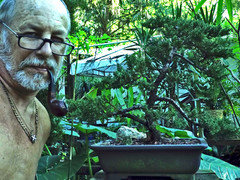
6 years agoThank you for all comments on my project . I'm aware of the specs on this tree. I'm able to keep a few diff bonsai conifers alive and doing very well in this subtropical zone. I think I can pull this off also. Of coarse most of the conifers have a hard go of it in this climate. Japanese elm also. I have a few very old trees of both and they are susceptible to fungus here. Back budding ( as can be seen from selfie & conifer bonsai in the attached photo) needs more of my attention than subtropical weather causing my conifer bonsai to die a slow death , as the conditions at this zone necessitates caring for most conifers (which are imported variety) a daily project on the to do list. This can be done under certain conditions but without a source I'm done. A link to seeds is attainable but I have gotten impatient in my old age and would like to start with an adult specimen. Any links out there? Thanks to all for any comments whatsoever ....and it's no surprise my plants from South East Asia love this climate most of the year anyway. We do get hard freezes here a few times.
Philip Bauer
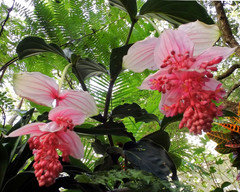
6 years agothese need no introduction I'm sure. They like me. But I care for them well too. Right conditions



davidrt28 (zone 7)